Tankless units are clever machines, and that is both their strength and their weak spot. Instead of keeping forty or fifty gallons hot around the clock, a tankless heater springs into action only when water starts moving: a flow sensor detects demand, the control board fires the burner or elements, and water is heated on its way through the heat exchanger. Every step is watched by a sensor, and if any reading drifts outside its expected range, the board shuts the heater off and displays a code. For Germantown, MD homeowners, that usually traces back to a short list of causes: scale building up inside the heat exchanger, a sticking or dirty flow sensor, an ignition problem at the igniter or flame rod, or a venting or gas supply issue the unit reads as unsafe.
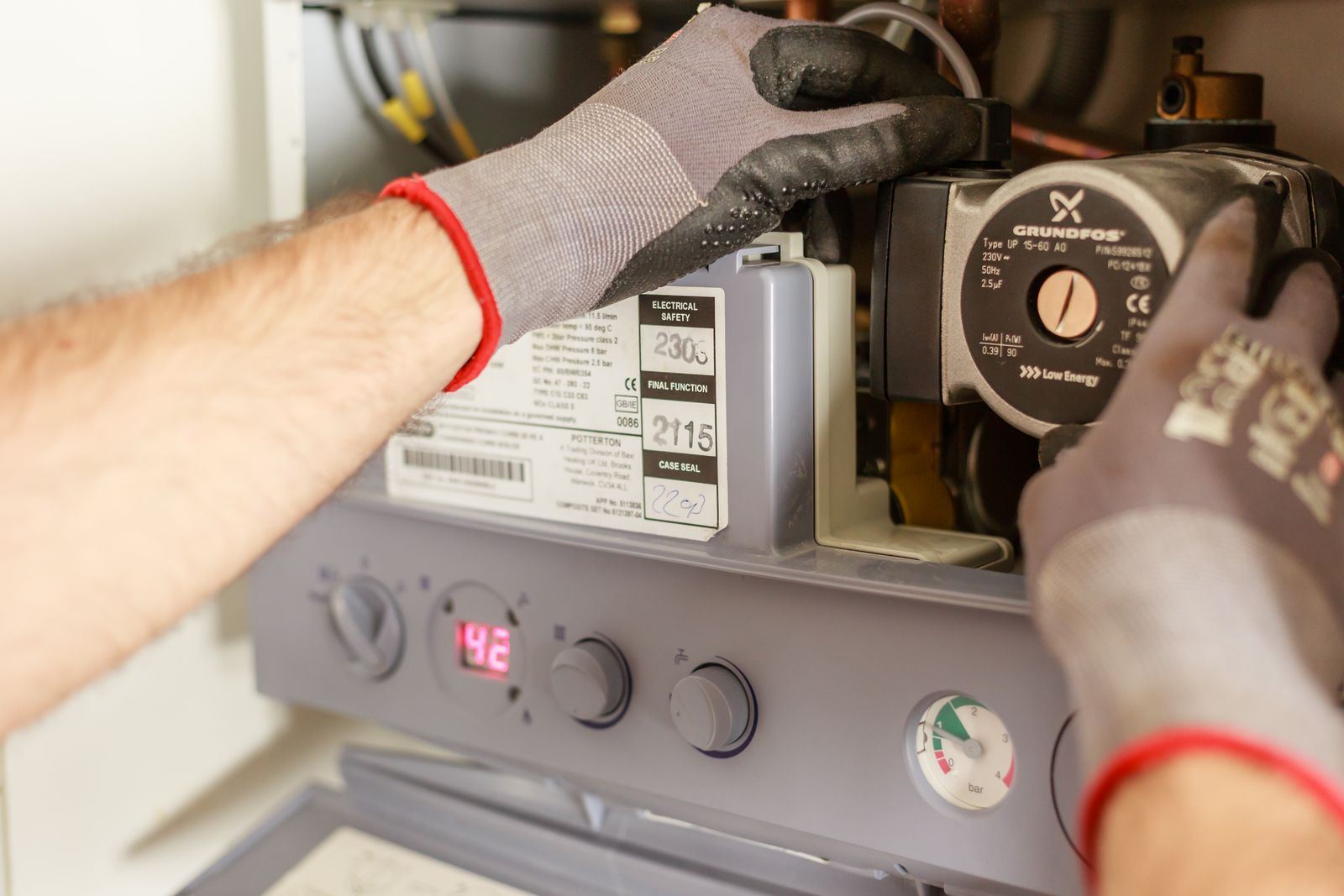
Error codes are a starting point, not a verdict, and we treat them that way on every Germantown call. The same ignition failure code can come from a worn igniter, a fouled flame rod, a gas line too small to feed the burner at full fire, or an air intake clogged with lint. That is why Germantown Water Heater tests before replacing anything. Our technicians read the fault history stored in the control board, watch flow sensor output with a faucet open, measure flame signal and igniter resistance, and put a manometer on the gas inlet to see what pressure actually reaches the valve when the burner is running flat out. We also compare inlet and outlet temperatures against the flow rate, which reveals a scaled heat exchanger long before it fails outright.
We work on tankless heaters from Rinnai, Navien, Noritz, Rheem, Takagi, and the other major brands, gas-fired and electric alike. The fix depends on the diagnosis: a full descaling flush through the isolation valves when scale is choking the heat exchanger, a new flow sensor when the unit no longer notices a faucet opening, a fresh igniter or cleaned flame rod when ignition keeps failing, or a vent correction when the unit trips on combustion air. Sometimes the answer is bigger. A gas line undersized for the unit's full firing rate has to be upsized, and a heat exchanger cracked by years of scale may make replacement the smarter call on an older unit. We lay out every option honestly before any money is spent. Call (240) 916-3391 and a technician will be on the way.
Most of our service calls are for Water Heater Repair in Germantown. Start there if you're not sure what you need.
Signs You Need Tankless Water Heater Repair in Germantown
Recognizing the warning signs early can save you money and keep a slow drip from turning into a flooded utility room. If any of the following sound familiar, it's worth having the unit checked:
- No hot water at a low-flow faucet even though the shower works fine
- Unusual noises from the cabinet, like a whine, a roar, or a rattle
- Repeated ignition attempts, then a shutdown
- Outlet temperature that surges and sags while water is running
- Temperature dropping sharply when a second shower or the dishwasher starts
- Water dripping from the cabinet or the condensate line
- An error code flashing on the unit's display
- Cold slugs in the middle of hot water that last longer than before
Small Symptoms, Big Consequences
A worn-out anode rod, a sediment-choked tank, or a weak thermocouple rarely fixes itself, and the repair usually costs more the longer it waits. At the first hint of a problem, reach out to Germantown Water Heater at (240) 916-3391 and we'll take a look.
Talk to Us About Tankless Water Heater Repair
One call gets a technician scheduled and a clear price before any work starts.
Call (240) 916-3391 NowTankless Water Heater Repair FAQ
The Benefits of Professional Tankless Water Heater Repair
From the outside a tankless heater looks like a plain box; inside, it is a tightly controlled system. A single error code can come from four or five different faults, and the sensors, igniters, and control boards involved are not cheap to buy on a hunch. Gas models add real hazards: the burner can fire at close to 200,000 BTU per hour, the vent carries combustion gases that contain carbon monoxide, and a loose gas connection or a vent joint that separates can put fuel or exhaust into the living space. Electric tankless units carry their own risk, often drawing well over 100 amps across several 240-volt circuits, so a loose lug or undersized wire can overheat quickly.
Professional service is usually the cheaper path, too. Our technicians do not guess at error codes. They test flow sensors under real flow, measure flame rod signal, confirm igniter resistance, read inlet gas pressure at full fire, and check the vent from end to end. When scale is the problem, we flush it out properly and rinse the system before the unit goes back in service. And because some tankless problems, like an undersized gas line or a cracked heat exchanger, are not solved by parts at all, we tell you so directly, before you commit to anything.
Step by Step: How a Visit Works
Our workflow is simple and thorough, so nothing gets missed between the fuel supply and the relief line. Here's how we handle tankless water heater repair from start to finish:
Diagnose the Error Code
Every visit starts at the control board. We read the current code and past faults, then confirm the diagnosis with a meter and a manometer on the flow sensor, ignition parts, gas supply, and vent.
Honest Answers & Upfront Price
We show you the failed part, explain the cause, and give you a firm price before work begins. If scale has cracked the heat exchanger or the unit is near the end of its life, we say so plainly.
Targeted Repair
We carry the parts that fail most on tankless units, so flow sensors, igniters, flame rods, and thermistors are usually replaced on the spot, and descaling is done in roughly an hour.
Verified Temperature Rise
We run hot water at several flow rates, confirm the unit lights reliably and holds temperature, and check gas pressure at full fire before we leave.
Simple Ways to Extend Your Water Heater's Life
A few simple habits, like an annual flush and a quick look at the relief valve, can add years to a tank. Here's where to begin:
- Keep the unit powered during freezing weather so its freeze protection can work
- Clean the inlet water filter screen a few times a year so the flow sensor gets full flow
- Protect the heat exchanger with a softener or scale inhibitor when your water is hard
- Flush scale out of the heat exchanger annually, and sooner in hard water
- Make sure nothing blocks the exhaust vent or the air intake outside
- Do not keep resetting a recurring code; note it and have it checked
- Get the supply line checked before adding gas appliances, which can starve a tankless unit
Should You DIY or Call a Pro?
Some simple checks are fine to do yourself, but most water heater repairs benefit from professional tools, training, and experience. Here's a comparison:
| Consideration | Doing It Yourself | Professional Service |
|---|---|---|
| Diagnosis | Trial and error based on the manual | Code confirmed by component testing |
| Scale Removal | Vinegar poured in without proper valves | Pump-circulated flush through service valves |
| Gas & Venting | No way to test pressure at full fire | Combustion, venting, and gas supply checked |
| Electrical Work | Risk of shorting the control board | Wiring and connectors tested safely |
| Parts | Wrong sensor ordered on a guess | Correct part for the exact model |
| Result | Symptom patched, cause remains | Root cause fixed and verified |
Get Tankless Water Heater Repair Help Today
The sooner you call, the sooner the hot water is back. Reach Germantown Water Heater for fast service.
Get Help: (240) 916-3391Tankless Water Heater Repair Near Germantown
Wherever you are in the area, the same experienced team shows up with the same parts and the same pricing. Find your community below.